
Is Social Security Running Out in 2032?

What Does This Mean for Your Retirement?
Social Security isn’t disappearing tomorrow, but with potential benefit cuts projected in the next six years, the clock is ticking. If you’re counting on Social Security to help fund your retirement, there’s a date worth paying attention to: 2032. According to projections cited in a June 2026 report from InvestmentNews, Social Security could face benefit cuts of approximately 22% beginning in 2032 if lawmakers don’t address the program’s funding shortfall.
Put that into perspective. If you’re expecting Social Security to cover a meaningful portion of your monthly expenses, a reduction of that size could change how you pay for housing, groceries, healthcare, and many other everyday costs. That’s a big deal for millions of Americans who have spent years paying into the system. So, what will Washington do about it?
Changes Are Needed
First, let’s clear up a common misconception. Social Security isn’t expected to simply run out of money and stop sending checks in 2032. Workers and employers continue paying Social Security taxes and that revenue helps fund benefits. The concern is that the program’s incoming revenue may not be enough to cover all scheduled benefits once its trust fund reserves are emptied. Without legislative action, benefits would have to be reduced to match the revenue available under current law.
That distinction matters. Even if lawmakers don’t reach an agreement before 2032, Social Security is not projected to stop paying benefits altogether. However, retirees could receive less than the amounts they’re currently scheduled to receive. For people who depend on those benefits to make ends meet, that difference could be significant.
What Will Washington Do?
The issue isn’t new, but lawmakers continue to face pressure to find a solution. A June 2026 article from InvestmentNews, titled “Lawmakers Push New Social Security Bills to Avert Insolvency,” highlighted two proposed pieces of legislation intended to address Social Security’s long-term funding challenges. One proposal, the Bipartisan Social Security Commission Act, would establish a bipartisan commission tasked with developing recommendations to address the program’s funding shortfall. The commission would have one year to develop recommendations for Congress.
Another proposal, the Strengthening Social Security Act, would make several changes, including adjusting the formula used to calculate annual cost-of-living increases, gradually eliminating the cap on earnings subject to Social Security taxes, and increasing certain survivor benefits. These proposals take different approaches to the challenges facing the program. Other potential solutions could involve changes to payroll taxes, benefit calculations, or other aspects of Social Security.
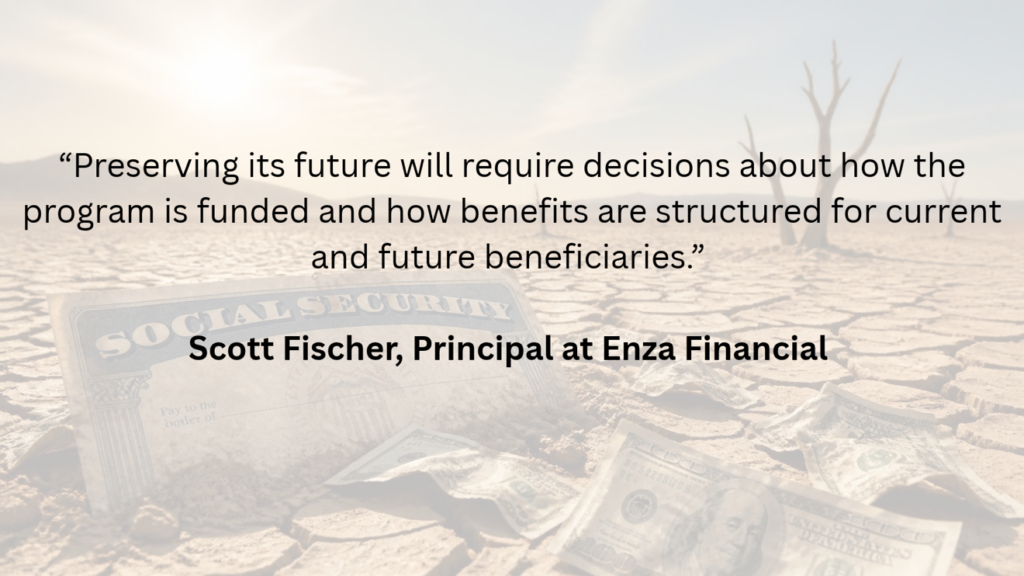
Proposing a solution and putting one into law are two very different things. These bills represent possible approaches, not guaranteed outcomes. Lawmakers still need to agree on what changes to make, how to implement them, and how to address the program’s long-term financial outlook. Social Security has been a cornerstone of retirement security for generations. Preserving its future will require decisions about how the program is funded and how benefits are structured for current and future beneficiaries. Will lawmakers reach an agreement in time and what might those changes mean for you?
Whether you’re decades away from retirement, approaching it, or already collecting benefits, Social Security may play an important role in your financial picture. But the role it plays can look very different from one household to another. Rather than assuming Social Security will disappear or counting on every detail of today’s benefit structure remaining unchanged, consider how different outcomes could affect your retirement plan.
Here are a few questions worth asking:
- How much of your retirement income will depend on Social Security?
If Social Security will provide a significant portion of your expected retirement income, you should consider potential benefit reductions. Understanding how much you may receive and how that fits into your overall plan is an important starting point.
2. What other sources of retirement income will you have?
Retirement accounts, pensions, personal savings, and other investments may help diversify your sources of income. Depending on your circumstances, building a plan that doesn’t rely too heavily on any single source can provide greater flexibility.
3. Have you considered what would happen if benefits were reduced?
Stress-testing your retirement plan under different scenarios can help you identify potential gaps before they become a problem. Even if lawmakers ultimately resolve the funding issue, understanding your options can help you make more informed decisions.
4. Are you making the most of the time you have left before retirement?
For those still working, saving consistently, reviewing your investment strategy, and understanding your future income needs can all play a role in preparing for retirement. Your Social Security strategy also deserves careful consideration as part of the bigger picture. No one knows exactly what Social Security will look like in 2032 or beyond. Future legislation could change the outlook, but waiting for Washington to settle the issue before reviewing your own retirement strategy may leave you with fewer options.
We Have Work to Do
Social Security’s projected funding shortfall is a real issue and the 2032 date deserves attention, but it’s not a reason to panic or assume your retirement plans are doomed. It’s a reason to ask questions, understand your options, and make sure your financial plan can adapt as things change. Lawmakers will need to make decisions about Social Security’s future. In the meantime, you can take steps to understand how much the program matters to your retirement and what other resources may help support your goals.
At Enza Financial, we believe retirement planning should account for both what we know today and what could change tomorrow. While we can’t predict exactly what Washington will do, we can help you evaluate your retirement strategy and prepare for different possibilities. Concerned about how potential Social Security changes could affect your retirement? Contact your Enza Financial representative today to discuss your retirement goals, review your current plan, and explore the options available to you. Though we can’t control the future, we can take steps today to prepare for tomorrow.
Source: InvestmentNews, “Lawmakers Push New Social Security Bills to Avert Insolvency,” June 17, 2026.